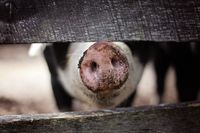
For the first time in the United States, the H5N1 avian influenza virus has been detected in a pig, as announced by the U.S. Department of Agriculture (USDA) on Wednesday. The discovery was made during an investigation into influenza cases at a small-scale farming operation in Oregon, where a variety of poultry and livestock, including pigs, were present.
The USDA and local veterinary officials have indicated that the animals on this farm shared water sources, living quarters, and equipment, which in other instances has facilitated the transmission of diseases across different species.
Following the identification of H5N1 in other animals on the premises, five pigs were humanely euthanized for further testing. Of these, two tested negative for the virus, while the results for the remaining two are still outstanding. The farm has been placed under quarantine, with surveillance measures in place for the other animals. However, the USDA’s Animal and Plant Health Inspection Service has reassured the public that this is not a commercial farming operation, and there is no risk to the safety of the nation's pork supply due to this instance of H5N1.
H5N1 is a strain of influenza that is infrequently found in humans but is highly contagious and lethal in several animal species, including poultry and dairy cattle. There is a concern that this virus could mutate and become a pathogen that also targets humans. Scientists have been vigilant about the potential for H5N1 to spread to pigs, which are known as "mixing vessel" species for flu viruses. Pigs possess receptors on their lung cells that are similar to those found in humans and birds, which can facilitate rapid changes and the development of new viral capabilities in the case of previous flu infections.
The 2009 H1N1 influenza pandemic is thought to have originated from a virus that mutated in pigs in Mexico before it was transmitted to humans. This year, across the United States, over two dozen individuals have tested positive for H5N1 influenza, with nearly all of them reporting contact with infected dairy cows or chickens, according to data from the U.S. Centers for Disease Control and Prevention.
Some experts in infectious diseases have called for greater clarity regarding the specifics of the pig case in Oregon. Dr. Michael Osterholm, an infectious disease specialist and director of the Center for Infectious Disease Research and Policy at the University of Minnesota, questioned whether the virus was detected on a nasal swab or if there was evidence of a more profound infection in the lungs. He cautioned against using the term "infection" prematurely, suggesting that it might simply be environmental contamination of the nasal area. Osterholm emphasized the need for further data to clarify the situation.
He also referenced a 2023 study in which researchers attempted to infect pigs with H5N1 by applying the virus to their nasal passages and feeding them contaminated food. The study was largely unsuccessful, with only one out of eight pigs showing evidence of infection in their blood, indicating a high level of resistance to the virus among pigs. Osterholm expressed his appreciation for the additional studies being conducted on the animals in this latest case to gain more insights.
Veterinarians who monitor infections that can be transmitted between animals and humans have noted that it is not surprising for pigs to be infected on a farm where infected birds are also present. Dr. Scott Weese, a veterinarian and head of infection control at the University of Guelph in Ontario, stated in an email that while virus sequencing will be crucial, it is likely that the circulating strain is of avian origin. He expressed more concern over the potential for mammal-to-mammal transmission, particularly if the infection were associated with dairy cows.
Weese further explained that he assumes this is an isolated case of spillover infection, but it underscores the potential issues related to cross-contamination among different species on farms. He added that these issues would be more pronounced in larger commercial farms, where there is a greater chance for pig-to-pig transmission and a higher likelihood of other flu viruses being present, potentially leading to the exchange of genetic material.
The detection of H5N1 in a pig in the United States marks a significant event in the surveillance of animal diseases and their potential impact on human health. It highlights the importance of continued vigilance, research, and collaboration between veterinary and public health officials to monitor and mitigate the risks associated with emerging infectious diseases.

By Ryan Martin/Nov 6, 2024

By Christopher Harris/Nov 6, 2024
By Emma Thompson/Nov 6, 2024
By James Moore/Nov 6, 2024
By Samuel Cooper/Nov 6, 2024
By Daniel Scott/Nov 6, 2024

By Noah Bell/Nov 6, 2024

By Benjamin Evans/Nov 6, 2024

By Elizabeth Taylor/Nov 5, 2024

By Thomas Roberts/Nov 5, 2024

By Emily Johnson/Nov 5, 2024

By Eric Ward/Nov 5, 2024

By Megan Clark/Nov 5, 2024

By James Moore/Nov 5, 2024
By Lily Simpson/Nov 5, 2024

By John Smith/Nov 5, 2024

By George Bailey/Nov 5, 2024

By Sophia Lewis/Nov 5, 2024

By John Smith/Oct 29, 2024

By Christopher Harris/Oct 29, 2024